
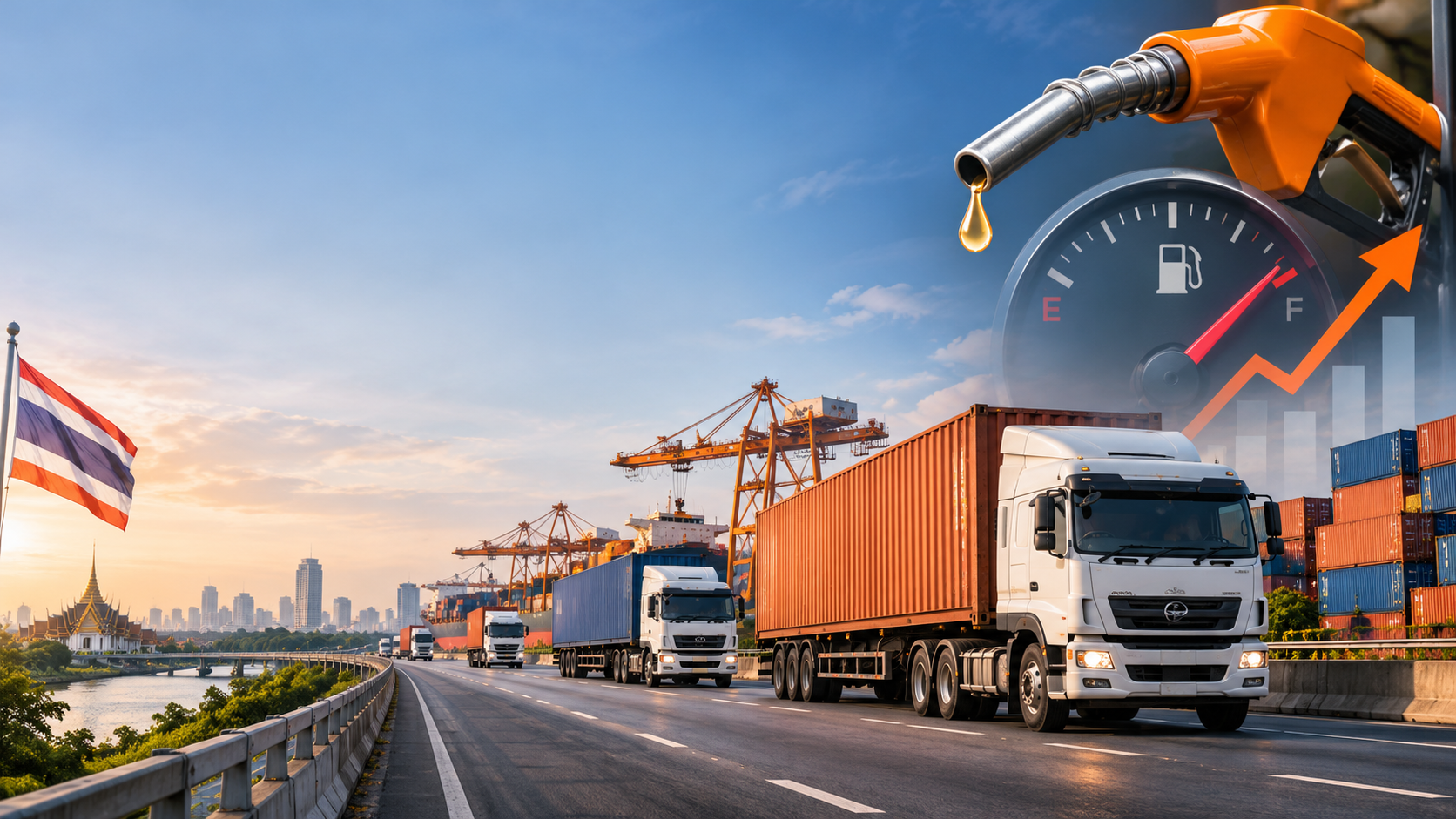
Thailand’s road transport sector is calling for urgent government action on diesel prices and energy pricing reform as rising operating costs continue to put pressure on logistics businesses and supply chains.
Transport Operators Demand Government Action
On November 4, 2026, the Land Transport Federation of Thailand and representatives from 13 allied transport associations gathered outside the Ministry of Energy in Bangkok to demand measures addressing high fuel costs.
Led by federation president Thongyu Kongkhan, the group submitted 10 proposals calling for immediate relief and longer-term changes to the country's fuel pricing structure.
One of the central proposals is to cap diesel prices at 35 baht per litre for one year, a measure transport operators believe could help reduce operating costs across the trucking industry.
The federation has given authorities approximately 60 days to demonstrate meaningful progress, warning that further demonstrations may follow if its concerns remain unresolved.
Rising Fuel Costs Put Pressure on Logistics Operations
Diesel is a major operating expense for road freight operators. Changes in fuel prices can directly affect delivery costs, freight quotations, and transportation budgets.
For companies relying on trucking services to transport raw materials, finished products, and containerized cargo, persistent fuel price increases can create additional financial pressure.
Small and medium-sized logistics providers may be particularly exposed because they often have less flexibility to absorb unexpected increases in operating expenses.
Fuel costs can also influence pricing decisions across the wider supply chain, potentially affecting manufacturers, distributors, retailers, and consumers.
Industry Calls for Long-Term Energy Pricing Reform
Beyond seeking lower diesel prices, transport representatives are calling for greater transparency in Thailand's energy pricing system.
Their proposals include reviewing fuel-related charges, examining refining margins, and reassessing how different components contribute to retail fuel prices.
Industry representatives have also questioned whether temporary tax reductions on selected fuel products provide sufficient relief to trucking businesses that primarily rely on other diesel grades.
Their position highlights a broader concern: short-term price support may ease immediate financial pressure, but structural reforms could be necessary to improve long-term stability.
Energy Ministry Receives Industry Proposals
Representatives of the Ministry of Energy received the federation's formal petition on November 4.
According to Thai media reports, the ministry indicated that discussions involving transport operators and the energy minister could take place within the following one to two weeks.
However, as of this November 5 update, the proposed diesel price cap and wider pricing reforms have not been confirmed as approved government measures.
The situation therefore remains an important development for businesses involved in domestic transportation and freight distribution.
What This Means for Thailand’s Logistics Sector
The ongoing discussion over diesel prices demonstrates how closely transportation performance is connected to national energy policy.
For logistics providers and businesses managing domestic supply chains, several operational priorities deserve attention:
Transportation cost management: Monitor fuel expenses and review freight pricing regularly.
Route optimization: Reduce unnecessary mileage, empty journeys, and inefficient vehicle utilization.
Shipment planning: Improve delivery scheduling and cargo consolidation where practical.
Digital logistics monitoring: Use transport management systems and real-time data to improve operational visibility.
Business continuity planning: Prepare for potential disruption if transport-sector demonstrations escalate.
While the eventual policy outcome remains uncertain, the latest developments reinforce the importance of cost visibility and flexible transportation planning.
Outlook for Thailand’s Logistics Industry
The coming weeks will be important for Thailand's road freight sector as government officials and industry representatives consider possible solutions.
Progress on diesel pricing reform could influence transportation costs, operating margins, and supply-chain planning for businesses nationwide.
For logistics operators, staying informed about fuel policy developments while improving operational efficiency will remain essential to maintaining competitiveness in a challenging transportation market.